
Start coloring with one small section
Choose three pencils, try a few swatches and color one small section. A simple starting exercise with an independent pencil demonstration.
By Coco Wyo LLC · Reviewed by Codex (AI), under owner delegation
Published
A small starting point
You do not need to finish a whole page to begin. Choose a small part of a design, pick a few colors you already have, and use that section to decide what you enjoy. This exercise gives you a starting point without asking you to buy a complete set of supplies.
Choose a page you want to spend time with
Look at the actual preview rather than judging a book only by its cover. For a first session, you might prefer larger spaces and fewer tiny details. Someone who enjoys careful, repetitive work may prefer a more intricate pattern. Neither choice is a skill requirement.
If you use a downloadable page, check its permitted use and follow the printing instructions supplied with it. A preview is not automatically a printable file. Our free sample page is the place to check available downloads and their instructions.
Start with the supplies you have
For this exercise, choose three colored pencils and a printed design. Test the pencils on a spare piece of the same paper if you have one. Notice how a light pass looks before adding more pressure. Paper and pencils vary, so the result on another sheet may differ.
This exercise does not establish whether a book is suitable for markers, paint or other wet materials. Check the exact edition's information before changing materials. If compatibility is not stated, do not assume it from a product photograph.
Give your three colors simple jobs
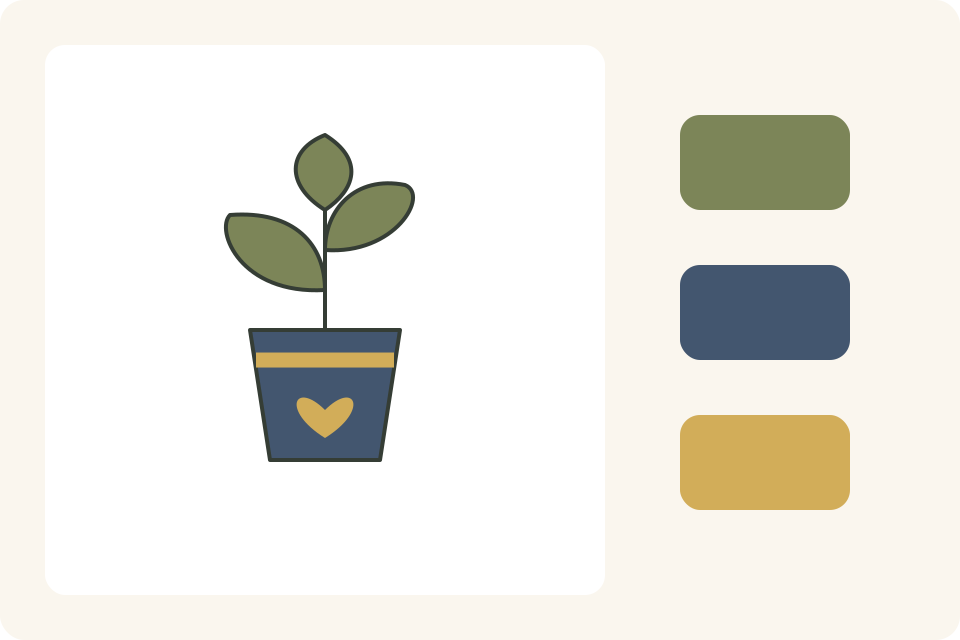
Use one color for the largest shape, a second for a neighboring detail, and a third for a small accent. For example, try green leaves, a blue pot and a yellow decoration. These are suggestions, not rules; substitute colors you like.
Before starting the picture, make three small swatches on scrap paper. Put them beside one another. If you dislike the combination, change one color and look again. The swatches help you make the decision before you commit to a larger area.
Color one section, then pause
An uneven patch or a line crossed does not require you to discard the page. You can leave it, work it into a different choice, or start another section. The exercise is about finding a way of coloring that you want to return to.
- Choose a small group of connected shapes, such as a pot and its leaves.
- Fill the largest shape with light pencil strokes. Let the paper show through if you like that effect.
- Add the second color to a neighboring shape and the third to one small detail.
- Step back and look at the group. Decide whether to leave it as it is, add another light pass, or try a different combination in another section.
Keep one useful note
For a demonstration of pencil strokes, shading and layering, watch Basic Colored Pencil Strokes, taught by Lhey Ralston for Faber-Castell. The class is in English and uses Polychromos pencils. You do not need that brand for the exercise above. The demonstration is independent of this store and does not test Coco Wyo paper.
Write down the colors you used and one thing you would repeat next time. You could keep the swatch strip with the page. There is no required session length and no need to finish the background.
When choosing a book, check its actual format and edition language as well as the designs. Browse the book catalog, then open the individual product page for the edition details. A translated storefront does not mean the printed book is translated.